
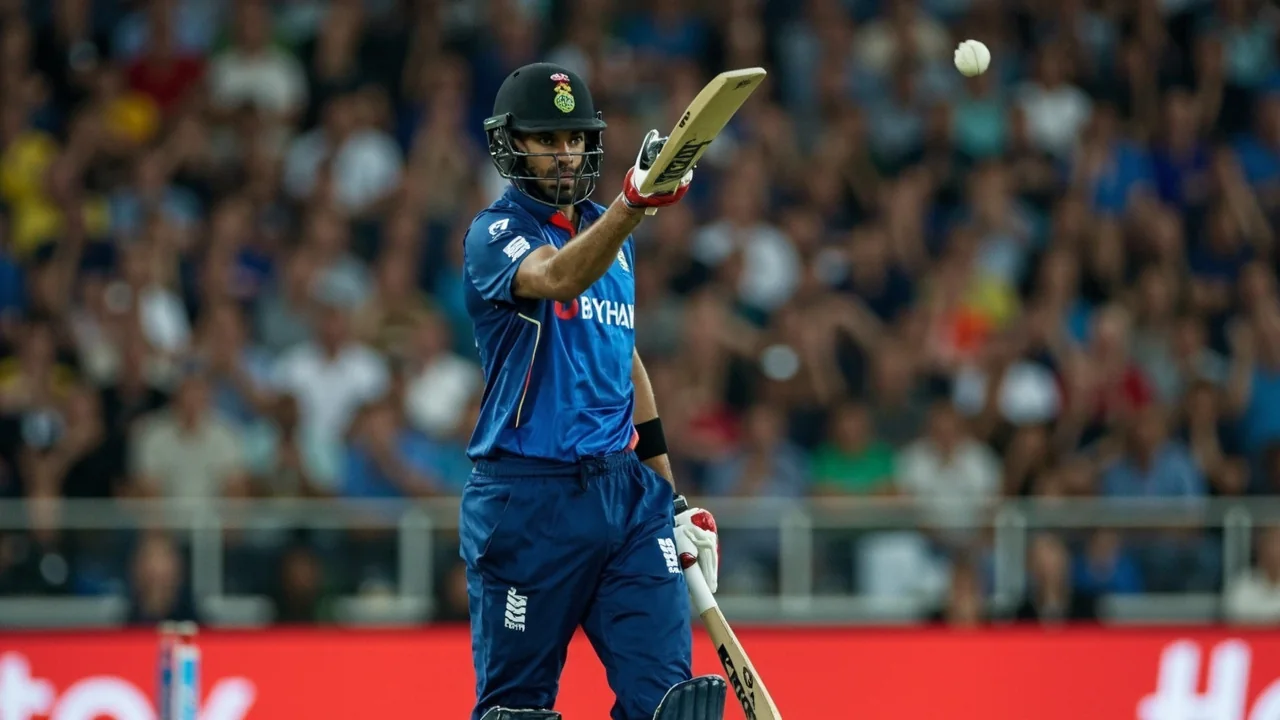
On the evening of 8 July 2026, Jofra Archer stood at the broadcast podium at Trent Bridge and said the quiet part out loud. The IPL, in his words, had felt like "easy mode". It was not a complaint about his own league. It was a comparison, drawn in real time after he and Josh Tongue had torn through India's batters on a Nottingham surface that did exactly what English pitches are supposed to do against white-ball sides used to flatter conditions.
England beat India in the second T20I of the series by a comfortable margin. Tongue finished with 4 for 28 from his four overs, his first T20I wickets after going wicketless on debut in Manchester a few nights earlier. Archer took three and was named Player of the Match. Together the two seamers accounted for seven of the wickets that fell on the night. The result, and the language used to describe it, returned the IPL-versus-international-cricket debate to the front of the Indian cricket conversation, three weeks before the IPL 2026 post-season really settles into its rhythm.
What happened at Trent Bridge
India's batters walked into conditions that did them no favours. The Trent Bridge pitch offered extra bounce and lateral movement off the seam. Square boundaries were shorter than at some Indian grounds but not punishingly so. The bowling was sharper than the surface alone. Tongue hit a consistent length and made the new ball talk; Archer, returning to full rhythm after his injury-managed build-up, ran in at high pace and asked questions that Indian batters did not always answer.
CricViz's tracking for the night put England's seam-bowling average during the powerplay at 89.9mph, the fastest powerplay spell by an England attack in T20I history. All three of Archer's wickets came off deliveries clocked at 90mph or quicker. That is not just pace on a speed gun. It is pace with a plan, executed on a pitch that rewarded the plan.
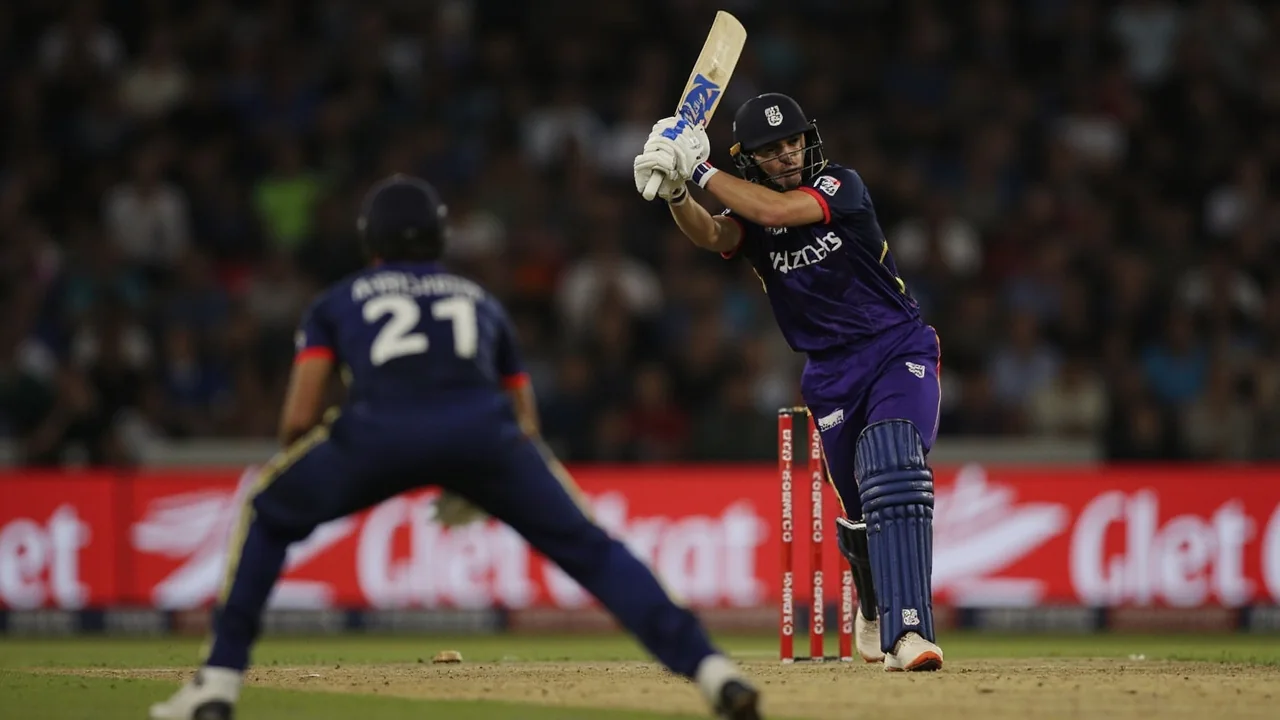
Archer's three wickets, in detail
Archer's first dismissal was Vaibhav Sooryavanshi, caught behind by Jos Buttler off a bouncer angled at leg stump. The dismissal was notable for two reasons beyond the wicket itself. Sooryavanshi is Archer's Rajasthan Royals teammate in the IPL, and the bouncer is the kind of delivery that shorter Indian boundaries make harder to justify as a percentage play. The second was Shreyas Iyer, caught at deep square leg off a half-volley that sat up just enough to be hit but not enough to be hit safely. The third was Axar Patel, edging a length delivery angled outside off, a classical Test-match line that worked because the pitch gave the bowler just enough movement to find the edge.
Each dismissal had its own plan. Together they formed a single argument: at Trent Bridge, a fast bowler who lands the ball in the right place does not need mystery. He needs speed, accuracy and a surface that respects the question.
The quote that framed the night
Archer's post-match answer is the one most readers will remember. Asked about the contrast between the IPL and international cricket, he did not soften his view.
"It goes back to normal here. You try to bowl straight and good length, whereas over there, because they make it so easy [for batters] and the boundaries are so small, you have to be really, really particular. Whereas here, I feel like your margin for error is a little bit bigger."
— Jofra Archer, post-match, Trent Bridge, 8 July 2026, as quoted by Yahoo Sports and The Cricket NewsHe went further on the scoreboard pressure question. Asked whether 200 looked chaseable on this surface, his answer was that he did not want to call it confidence, but that on this wicket a chase of 200 would have needed something special from India's batters.
"At the IPL, sometimes 200 isn't safe. With 200 on the board on that wicket, I don't want to say [we were] confident, but I feel like they would have taken a really special innings there to lose the game."
— Jofra Archer, post-match, Trent Bridge, 8 July 2026Those two lines, taken together, are why the comment travelled. They are not a criticism of the IPL as a tournament. They are a bowler's honest description of how surfaces shape the contest. In India, the bowler has to be precise because the conditions are kind to the batter. In England, the bowler has a bit more margin because the conditions share the burden.
Why this is an IPL 2026 story
Indian cricket's post-season is rarely quiet for long. IPL 2026 wrapped up in late May, the new international cycle has already begun, and by the time England toured India and India toured England in the same northern summer, the same set of players were swapping colours, surfaces and roles. The question of what the IPL does to Indian batting, and to the bowlers who face them in league cricket, is one of the recurring frames of any IPL post-season.
For IPL 2026 readers tracking how the league shapes international cricket, Archer's comment lands in three places at once. First, on the specific match, where it is a fair description of what just happened. Second, on the wider debate about whether batters who play the bulk of their cricket in India struggle when they cross over to surfaces with bounce and movement. Third, on the bowler's craft itself, where the margins tighten in the IPL and widen slightly in international cricket played in English conditions.
None of those readings is new. Each has been written about after every England-India T20I series for years. What makes the Trent Bridge night worth returning to is the specific combination: a record powerplay speed, two bowlers working in partnership, and a quote that says the same thing in fewer words than most analysts would use.

The pace reading deserves more than a number
CricViz numbers tend to live in analyst threads and broadcast graphics. The 89.9mph powerplay average is worth dwelling on because it is a record, and because it tells a story that goes beyond Archer's three wickets. A powerplay average is not the same as a top speed. It is the speed at which the entire attack operated across the field-restriction phase, ball after ball. Holding 89.9mph across six powerplay overs means every ball was a fast ball, with the variation coming from line, length and angle rather than from slowing down to change pace.
For Indian batters who face 130-145kph (about 81-90mph) regularly in the IPL, that figure is not unfamiliar. What was unfamiliar was the combination of that speed with English conditions. In the IPL, the ball travels faster off the bat and square boundaries shorten the fielder's reaction time. At Trent Bridge, the ball moved off the seam, the pitch had bounce and the outfield was not as quick. The pace felt different because the same delivery demanded a different shot selection.
That is what Archer meant by margin for error. A fast bowler on a flat Indian track can miss by a centimetre and still leak a boundary. A fast bowler on a Trent Bridge pitch can miss by a centimetre and still get the edge. The two bowling experiences are not the same job, even when the personnel is identical.
What it means for the bowlers going the other way
Archer was not the only bowler to draw that comparison in the week. Around the same tour window, several England fast bowlers, including those playing IPL contracts, talked publicly about the gap between franchise and international demands. The honest summary of their comments is consistent: in the IPL, you plan around batting order, match-up, dew and the boundary rope. In international cricket in England, you plan around the pitch, the overhead conditions and the bowler's rhythm over a long spell. Both are professional cricket at the highest level. They are not the same brief.
For Indian batters preparing for the next English tour, the practical read is familiar. The IPL sharpens the scoring game. International cricket in England sharpens the survival game. Players who can switch between the two without changing their identity are the ones who keep their place across formats. Players who cannot are usually found out by the conditions first, and the scoreboard second.
What it means for India's bowlers in the IPL
The flip side is worth saying out loud, because the IPL post-season conversation often skips it. Indian seamers who play the IPL do not just benefit from the league. They also face a version of the same adjustment in reverse. When they bowl at IPL batters on flat tracks with short square boundaries, they have to be more precise than they ever were in age-group cricket. That extra precision is what some of them then take back into Indian colours.
The asymmetry is real. Indian batters who move from the IPL to English conditions face a new challenge. Indian bowlers who move from the IPL to English conditions face a familiar one, just on a different surface. The bowler's training under IPL pressure is, in some ways, the closest available preparation for international seam-bowling. The batter's training under IPL pressure is the closest available preparation for run-chases. It is not the closest available preparation for survival on a moving pitch.
The Tongue story is part of the headline
It would be a mistake to read the night as a one-man Archer show. Josh Tongue's 4 for 28 was, in its own way, the more revealing performance. He had taken the new ball in Manchester on debut a few days earlier and walked off wicketless. In Nottingham, on the same tour, he picked up four wickets in four overs. That is a young fast bowler learning the international game in real time, and the lesson he was given by the conditions was the same one Archer described afterwards.
For England, Tongue's emergence is a depth story as much as a result. The Archer-Tongue pairing is not yet a partnership in the way that Anderson-Broad became one, but it is a credible second-string seam combination for the next cycle of white-ball cricket. For India's batting group, the read is the same one they have been working on since the 2024-25 Test cycle: the league sharpens you in one direction, and the international game sharpens you in another, and the work is in switching between them.
A retrospective reading, with the calendar in view
The match happened on 8 July 2026. It is now the end of July, and the IPL 2026 off-season is in full swing. The post-mortems from the English summer will run through the next few weeks. What is worth keeping from this game, beyond the headline quote, is the gap between the question the bowler is asked in the IPL and the question the bowler is asked at Trent Bridge.
Both questions are honest. Both produce good cricket. They just produce different cricketers. Archer's comment, read carefully, is not a complaint about either league. It is a description of how the same skill is asked to perform in two different rooms. The skill is what the bowler brings. The room is what the league or the venue provides.
What to watch next
The next checkpoint is not another England-India fixture. It is the IPL 2026 post-season itself: which franchises have already started retention conversations, which English players are likely to be back for the next IPL auction, and whether the league's ongoing efforts to balance bat and ball show up in the playing conditions for the next cycle. None of those answers come from this single T20I. Each of them is influenced by the gap Archer described at Trent Bridge.
For readers who want to follow the IPL side of that conversation, the IPL 2026 reading on SG11 Fantasy tracks auction signals, squad balance and the questions franchises are asking about pace, depth and finishing. The England-India T20I was a single night. The post-season is a longer arc.
Track the IPL 2026 post-season with cleaner squad reads
Rs 1 contests, instant withdrawals and practical previews on every IPL fixture.
PLAY NOWQuick questions
What did Jofra Archer mean by the IPL feeling like 'easy mode'?
What was the result at Trent Bridge on 8 July 2026?
How fast were England's seamers during the powerplay?
Who did Archer dismiss in the match?
Why is this relevant to the IPL 2026 post-season?
Reporting basis: Yahoo Sports, syndicated from The Cricket News (cricketnews.com), reporting by Soham Mukherjee, published 8 July 2026 at 08:26 UTC, on the second England-India T20I at Trent Bridge, Nottingham, and Jofra Archer's post-match interview. CricViz powerplay speed data was reported in the same Yahoo Sports article. SG11 Fantasy has rewritten the account independently for IPL 2026 readers tracking the post-season.