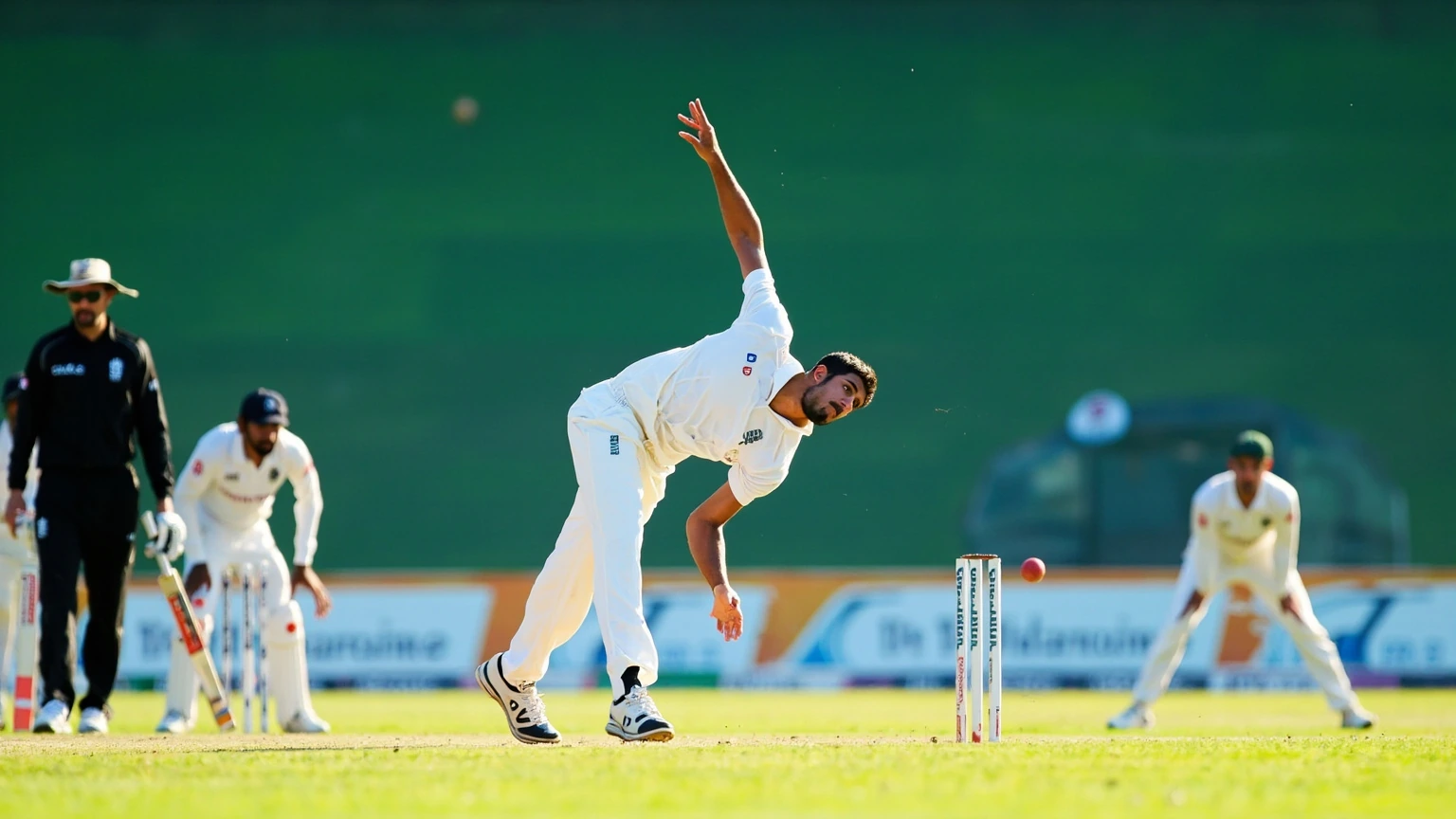
Fantasy Cricket Phase Coverage: How to Build a Balanced T20 XI on SG11
A role-first framework for covering the new ball, middle overs and death overs without overloading your SG11 lineup with players who depend on the same match script.
📅 19 July 2026⏱ 12 min read✍ SG11 Fantasy Editorial Desk
Compliance Notice: Fantasy sports are skill-based but outcomes are uncertain. Use SG11 only if you are 18+ and in an eligible jurisdiction. Set limits, avoid chasing losses and play responsibly. SG11 Fantasy is a skill-based fantasy sports platform for adults in permitted Indian states. Identity verification does not remove financial risk. Set limits, never borrow to play and check local rules.
A balanced fantasy cricket team is not simply a collection of the highest-projected names. It is a portfolio of scoring opportunities spread across the phases of a T20 innings. This SG11 framework shows how to map those opportunities before the toss, update them when the XIs arrive, and avoid lineups that need one perfect match script to survive.
Why phase coverage is a better starting point than star collecting
A fantasy XI can contain eleven excellent cricketers and still be poorly built. The common failure is not a lack of names; it is a lack of opportunity coverage. If six players do their best work only in the first six overs, the team needs the opening phase to deliver almost everything. If the pitch slows, an early wicket changes the batting order, or the new ball barely moves, too much of the lineup loses access to points at once.
Phase coverage starts with a simpler question: where can each selected player earn points? In a T20 match, the practical map is the powerplay, the middle overs and the death overs. A batter may own one phase and merely survive another. A bowler may take the new ball, operate through overs 7-15, or return when batters attack at the end. Wicketkeepers and all-rounders can touch several phases through catches, stumpings, batting and bowling.
This framework does not replace player quality, venue analysis or matchup research. It organizes those inputs. The goal is to avoid an XI whose ceiling depends on one narrow script and to make every selection explainable before the lineup lock.
Map every probable player to a role before comparing projections
Begin with the announced or most likely role rather than season totals. For batters, record the expected batting slot, whether they face the new ball, and whether their boundary rate changes against pace or spin. For bowlers, note the likely overs: new ball, middle, death, or a flexible split. For wicketkeepers, add the probability of standing up to spin and batting high enough to receive meaningful deliveries.
Use a small role card for each candidate: primary phase, secondary phase, minimum likely involvement, and ceiling route. An opener's primary phase is the powerplay; a number-seven finisher may have only a death-overs route. A wrist-spinner's primary phase is usually the middle, while a seamer trusted with overs 2 and 19 has two distinct scoring windows. This makes hidden role risk visible.
The latest scorecard matters more than a generic label. A player listed as an all-rounder may not have bowled recently, while a nominal batter may now open. Check the confirmed XI, recent batting order and over distribution. The ICC playing-conditions page is a useful rules reference, but selection decisions should be tied to the actual match and final team news.
Map each player to a primary and secondary scoring phase before comparing names.
Powerplay coverage: secure access without stacking one outcome
A balanced powerplay group usually contains top-order batting access and at least one credible new-ball wicket route. Two or three top-three batters can provide delivery volume, but selecting both openers from both teams plus several new-ball bowlers creates conflict and concentration. The lineup then requires an unusually productive first six overs to carry the whole score.
Separate floor from ceiling. A technically secure opener may provide balls faced and boundary chances; an attacking opener may offer a higher ceiling with a lower survival floor. A swing bowler can score rapidly through wickets but may lose value on a flat surface. Combining one stable batting route, one explosive route and one wicket-taking route is often healthier than choosing three versions of the same idea.
Do not assume that every opener is automatically a captain candidate. Captaincy needs both role security and a strong scoring ceiling. If the venue has early movement, an opener's delivery volume is less certain; a multi-phase all-rounder or bowler with new-ball and death duties may offer more routes to the multiplier.
Middle-overs coverage: where spin, strike rotation and dismissals meet
Overs 7-15 are easy to underweight because they look quieter than the start and finish. Yet this phase can supply a large share of fantasy wickets, catches and rebuilding runs. Wrist-spinners, attacking finger-spinners and pace-off specialists often bowl when batters must balance consolidation with acceleration. Middle-order batters can face the most tactically varied portion of the innings.
Look for bowlers whose captain uses them as wicket takers rather than gap fillers. A spinner with three likely overs in the middle may be more valuable than a famous seamer whose role has shrunk to two uncertain overs. Pair that bowling route with at least one batter capable of handling spin and rotating strike, especially when the pitch is dry or large square boundaries reward placement.
Wicketkeeper involvement also rises when spin is central. Stumping chances are not projections to bank on, but they add another scoring route. The strongest middle-overs picks are those who remain useful even if the match script changes: a spinner who can bowl after the powerplay or an all-rounder who can repair an innings and still deliver overs.
Middle overs and death overs reward different skill sets and different risk tolerance.
Death-overs coverage: chase wickets, but price in volatility
The final overs offer concentrated opportunity: boundary hitting, wickets, catches near the rope and run-out chances. They also contain the highest variance. A designated finisher may face four balls or twenty. A death bowler may take two wickets in an expensive over, or the innings may end before the planned final over arrives.
Choose death specialists by role evidence, not reputation. Review who bowled overs 18 and 20 in recent matches, whether the captain changed plans based on matchups, and whether a second seamer shares the closing workload. A bowler used both with the new ball and at the death has two windows and can be safer than a one-over specialist.
For batters, prioritize a finishing role supported by actual entry position. A player listed at number six can arrive in the 12th over after early wickets or never bat in a dominant chase. That uncertainty is acceptable in high-variance contests, but a balanced XI should not carry several finishers who all need the same collapse-or-shootout script.
Build a phase-coverage matrix before spending the final credits
Create three columns—powerplay, middle and death—and place every selected player in the phases where meaningful involvement is likely. Count primary roles, not vague possibilities. A practical starting target is coverage from at least three or four players in each phase, with overlap supplied by all-rounders and multi-spell bowlers. This is a diagnostic, not a rigid quota.
Then test concentration. If five selections rely on one team's top order, ask what happens if that side loses two early wickets. If four bowlers all need a low-scoring pitch, ask how the XI survives a batting-friendly game. Replace one correlated pick with a player whose opportunity appears in another phase or on the other side of the matchup.
Credits should be the last constraint, not the first idea. Start with role access, remove redundant exposure, and then find value that preserves the map. A cheaper middle-overs bowler with a secure spell can be more useful than an expensive star with an uncertain assignment. The matrix makes that trade-off visible.
A phase matrix exposes duplicated roles before credits force a compromise.
Captain and vice-captain selection through independent scoring routes
Multipliers magnify both good analysis and concentration risk. A captain and vice-captain from the same narrow phase may be logical in a strong matchup, but they also fail together more often. Splitting them across independent routes—such as a top-order batter and a multi-phase bowler—can keep the lineup alive under more match scripts.
All-rounders deserve attention only when both roles are genuine. A player batting at seven and bowling one over is not automatically a safe multiplier because the app labels them an all-rounder. The best multiplier candidates have secure involvement, not merely theoretical involvement: top-four batting plus a likely spell, or new-ball and death overs with wicket intent.
For smaller contests, favour reliable role volume and avoid novelty for its own sake. For larger contests, a lower-owned vice-captain can be reasonable when the role is underappreciated, but the phase map should still support the choice. Differentiation without opportunity is just a weak pick.
Toss, venue and substitute rules: the final 15-minute audit
The toss should update the role map, not erase it. Confirm the playing XIs, batting order clues, bowling-first advantage, dew risk and any substitute mechanism used in the competition. A spinner expected to defend a dry ball may become less attractive if heavy dew is likely in the second innings, while a chasing opener may gain clarity from a visible target.
Venue dimensions matter by phase. Short straight boundaries may help pace-on hitting; large square boundaries can support spin and cutters. Wind can change which boundary is easier to access. Use these details to break close calls, but avoid pretending that a single venue trend guarantees the match script.
Run a final checklist: every player confirmed, no injury concern ignored, no duplicate over-role assumptions, and captaincy still attached to secure involvement. Save screenshots or notes of the final role matrix. Reviewing why a prediction failed is much more useful than judging only whether the lineup cashed.
Use the toss to confirm roles, then make the smallest evidence-based adjustment.
A worked balanced-XI blueprint for common T20 match scripts
Suppose Team A has an aggressive opening pair, a spin-playing number three and a proven death bowler. Team B has one stable opener, two middle-overs all-rounders, a wrist-spinner and a seamer who bowls overs 1, 3, 18 and 20. A phase-aware build might take one aggressive opener and one stable opener, the spin-playing number three, both genuine all-rounders, the wrist-spinner, the multi-phase seamer, one additional new-ball bowler, one death hitter and a wicketkeeper with a top-four slot.
That shape is not a universal team sheet. Its value is the distribution of opportunity. Early runs can come from either side, middle overs contain batting and bowling routes, and the death has both wickets and finishing access. The wicketkeeper adds dismissal points while retaining batting volume. Captaincy can sit on a genuine all-rounder, with the multi-phase seamer or top-order keeper as vice-captain.
If the pitch is extremely slow, shift one powerplay-only batter toward an extra middle-overs role. If rain cuts the match, prioritize top-order and powerplay involvement because late phases may shrink. If the surface is flat and dew-heavy, reduce fragile spin exposure and retain bowlers with yorker or new-ball routes. The framework adapts without pretending to predict every event.
Use the SG11 checklist responsibly and measure decisions, not luck
Before entering a lineup, write one sentence for every selection: role, phase and scoring route. If the sentence depends on an unlikely promotion or an unconfirmed over, mark the player as speculative. Keep speculative picks limited and intentional. This simple discipline prevents a familiar stars-only team from masquerading as analysis.
After the match, compare expected and actual roles. Did the new-ball bowler receive two overs? Did the finisher enter where expected? Did the captain preserve the spinner for a matchup? Separate role-reading errors from outcome variance. A good role can produce a poor fantasy score; a bad role can occasionally succeed. Long-term improvement comes from identifying the difference.
Fantasy sports involve uncertainty and financial risk. No phase map can guarantee winnings. Use free contests where possible, set an affordable budget, never chase losses and comply with age and location rules. For more role-first selection methods, visit the SG11 Fantasy Tips hub and the fantasy cricket guides linked below.
Frequently asked questions
What does phase coverage mean in fantasy cricket?
Phase coverage means selecting players whose likely involvement spans the powerplay, middle overs and death overs, instead of choosing an XI with most of its opportunity concentrated in one short passage of play.
How many powerplay specialists should a balanced T20 fantasy XI include?
There is no fixed number, but a practical build often carries two or three top-order batters plus at least one new-ball bowler. The confirmed batting order and bowling roles matter more than labels.
Are death-over bowlers always better fantasy picks?
No. They may have high wicket upside but can also be expensive, lose an over to match conditions, or bowl only once at the death. Pick them when the role is confirmed and the matchup supports wicket chances.
Should captain and vice-captain cover different match phases?
Often yes. Splitting multipliers across different phases can reduce dependence on one passage of play, although a highly involved all-rounder may still justify both a phase role and a multiplier.
How should the toss change a phase-coverage team?
Use the toss to confirm batting order, bowling first or second, substitute possibilities and dew exposure. Make role-based changes, not wholesale changes based on a single narrative.
Can phase coverage guarantee fantasy winnings?
No. It is a team-construction framework, not a guarantee. Player performance, weather, matchups and variance remain unpredictable; use free or affordable contests and play responsibly.